Feeling Good Inside
 Do you ever worry about your OI? Do you ever feel stressed, worried, or tense? How does your body feel when you arestressed or worried? These are all mental health concerns that we want to help you to understand and manage!
In this module, you will read and see more about:
I. Managing Your Stress
Stress can affect how we feel, both physically (our bodies) and emotionally (our feelings). It is important to try to understand your stress. Then, you can learn ways to manage or reduce any negative changes that you experience.
What is stress?
Video: “Good Stress vs Bad Stress Explanation“
Stress often lies under the radar
Many may say that they aren’t under much stress. They may not think that stress triggers their pain or muscle fatigue or makes their symptoms worse. You may feel the same way. However, we know that many people are just not aware of the stress that their bodies experience. This is normal and may require a little special attention to figure out how your body reacts to stress.
Common stressors
Stressors are things that happen in your life that can trigger stress. Anything that forces us to adjust, or change can be a stressor. We usually think of stressors as being negative. Examples of negative stressors could be a busy school schedule or a rocky relationship with a romantic partner or your parents.
When we think of stress, we also may think about something really big, serious, or overwhelming. But a lot of times, stress can be caused by little things like missing the bus, having a bad night’s sleep, fighting with a friend or sibling, or dealing with a teacher. These little things can add up!
- Here are some common stressors:

How does stress work?
Stress is caused by your body’s natural instinct to protect itself from emotional or physical pressure or, in extreme situations, from danger. When we’re under stress, our muscles get a big dose of energy known as adrenaline. This extra boost of energy causes a fight-or-flight response. In other words, stress makes us more alert and decide to either confront the stress head-on or run away from the stress. Others may freeze when faced with a stressor, as if they are stuck.
But if we have too much stress or if stress lingers for a long time, we don’t use up the extra energy in our muscles. When this happens, our bodies experience physical changes: we become tense and our heart beats faster. These physical changes can lead to muscle fatigue. They can make your symptoms of pain, weakness, and fatigue worse. Pain can be made worse by stress that happens in our minds (mental stress) or body (physical stress).
What does stress look like?
 Stress can look different for everyone. Stress does not just affect your body (body stress), it also affects emotions or how you feel (mental stress).
 - Body stress
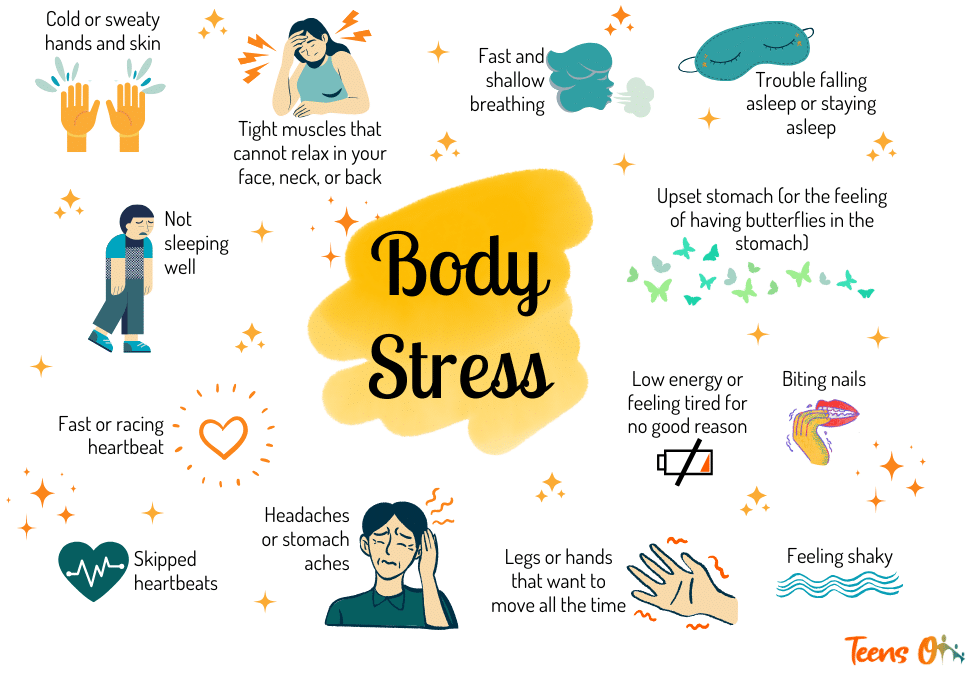
- Mental stress

Recognizing the signs of stress
Recognizing the signs of stress is one of the first steps in learning how to manage your emotions. Otherwise, you can get caught up in a cycle of stress and your symptoms can get worse. Stress can cause muscle tension. We know that muscle tension can lead to pain and weakness and can make the pain worse because it puts pressure on your body. This magnifies or increases the pain.
By learning to pay attention to your body, your stress and your tension level, you can take the first step towards learning to manage it. For example, if you are really tired, you are more likely to feel stressed. If you don’t do something to catch up on your rest, your stress is likely to build up. This can cause your pain to increase.
You can take some steps to break this cycle:
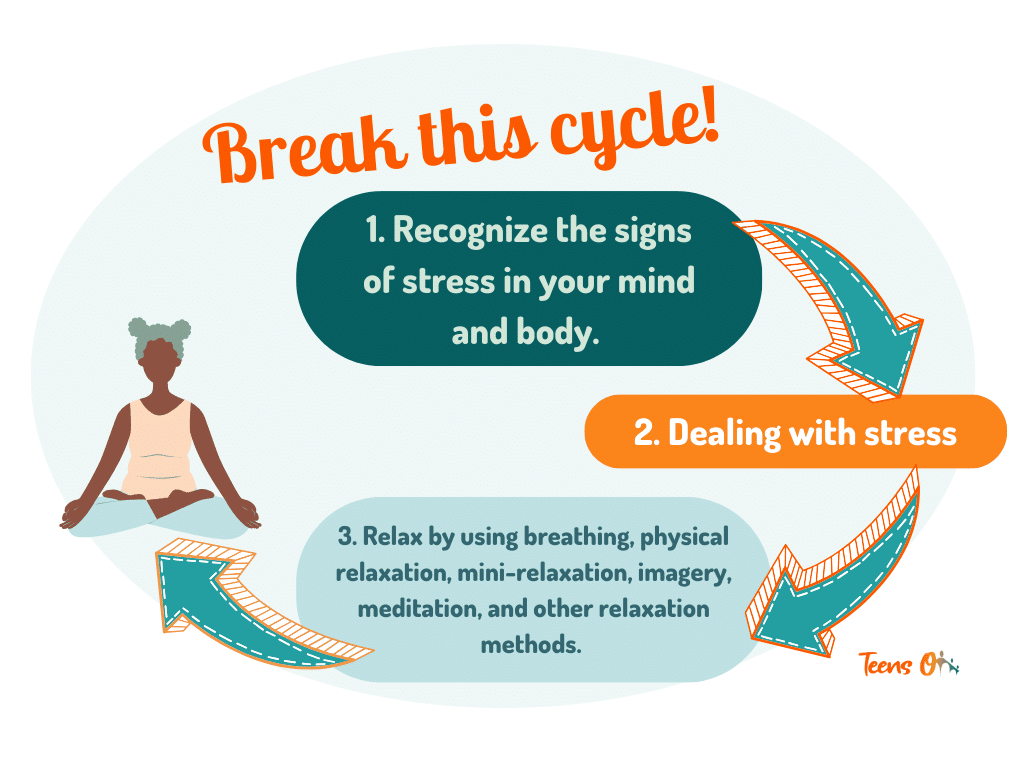
Dealing with the stress
- Eating well-balanced meals regularly
- Drinking less caffeine (e.g., coffee, tea, soft drinks, or energy drinks)
- Getting enough sleep (e.g., 8 to 10 hours per 24 hours)
- Exercising regularly
Everyone copes with stress differently, so here are a few ways that have been proven to help others cope with their stress:
Did you know? Alcohol and recreational drugs increase your stress once the effects wear off. High consumption of caffeine, such as coffee, tea, soft drinks, or energy drinks, can also mimic feelings of chronic stress (e.g., nervousness and rapid heart rate). You may want to consider reducing your intake of these substances.
- Avoid, stay away from, or manage your triggers, such as being overtired.
- Be mindful of the way you think about stressful events and avoid negative thoughts.
- Change your behavior. Learn to use relaxation and distraction techniques to manage stress. Visit the 🔗 Pain Module to learn how to use these techniques.
Getting enough sleep
Sleep is an important part of your well-being. It can help you to concentrate and manage your stress better. Not getting enough sleep can make some aspects of your OI worse. If you don’t sleep, you will be tired and may be at a higher risk of falling or tripping. Lack of sleep over a long period of time can also lead to changes in your body metabolism and weight gain.
Becoming aware of your thoughts
Although you cannot always control the things that are stressing you out, you can control how you react to them. The way you feel about things results from the way you think about things. If you change how you think, you can change the way you feel.
How thoughts affect your feelings and behaviours
Unhelpful Thinking Styles
The way we think influences the way we see things. Our perceptions can be influenced by our beliefs and expectations. For example, if we assume the worse, we tend to see things as more negative than they really are. It does not matter if our thought is true or not, we believe it because it makes sense to us. These unhelpful thinking styles are called cognitive distortions.
We all have negative or irrational thoughts at times – it is normal. However, if you cannot get these thoughts out of your mind, it could negatively shape how you see yourself, others, and the world at large. These thoughts – more than the situation itself – can also affect your mood and behaviours.
The good news is that it is possible to train our minds to think differently. In the next sections, you will learn how to do it.
- Catastrophizing
Another type of thinking that focuses on negative thoughts is called catastrophizing. A catastrophe is a disaster or something horrible, like a shipwreck or earthquake that kills many people. But catastrophizing is when we think that something really bad or horrible has happened or will happen, when in fact the reality is not so terrible.
Here is an example of how some young people may have catastrophizing thoughts:
- Carrie studied all week for her final Chemistry test of the year. When she got her test back a week later, she saw that her mark was 70%. This was the lowest mark she had ever gotten. As she stared at her test she thought: “I can’t believe I got this mark! I studied so hard, and none of it paid off! I’m going to fail the class and never get into university! My parents will hate me! My life is over!”
- Carrie turned a fairly small negative event (a not-so-great mark) into a catastrophe ("My life is over!")
- Everyone has negative thoughts. However, when people catastrophize, these thoughts lead to negative feelings and increased stress, which then becomes harder to manage.
- Have you ever had a catastrophizing thought?
- Realistic versus Unrealistic Beliefs
It’s a good idea to acknowledge that not all your thoughts always represent reality. Sometimes we can have unrealistic beliefs. In this example, the belief that IV bisphosphonate treatments are not helpful is unrealistic, because we have a ton of research that proves they reduce the risk of fractures in OI. Unrealistic beliefs lead to negative thoughts, like that you do not have the capacity to cope with the procedure. So, you have to practice differentiating between your realistic and your unrealistic beliefs.
For example, a more realistic thought for Brian would be: “I have had this unpleasant IV procedure before and made it through. It may hurt for a short time, but it can help a lot for a long time to come.”

Transforming Negative Thoughts
There are various ways you can use to stop or change negative thoughts. These techniques include mindfulness, replacing negative thoughts with positive ones, thought-stopping, and behaviour rehearsal.
- Mindfulness
For example, have you ever had a song stuck in your mind? Did you notice that the more you tried to stop thinking about it, the more you heard the song play in your mind, and the more annoyed you became? Now, what if you just accepted that the song is stuck in your head without fighting it, maybe it would just go away on its own.
When you are being mindful, you are accepting your thoughts and feelings in a non-judgmental way. When you have a negative thought, recognize the thought and accept it for what it is without judging it as good or bad. Don’t beat yourself up for having a negative thought or feeling; instead, observe what is going on in the moment, let it happen, and then let it go. Realize that thoughts are just thoughts and let them pass by. As you are practicing mindfulness, it might even help to take some slow deep breaths. Breathe in when you notice the thought and breathe out when you let the thought go. If you practice mindfulness, your thoughts will have less of an effect on your feelings and your mood.

- Replacing negative thoughts with positives ones
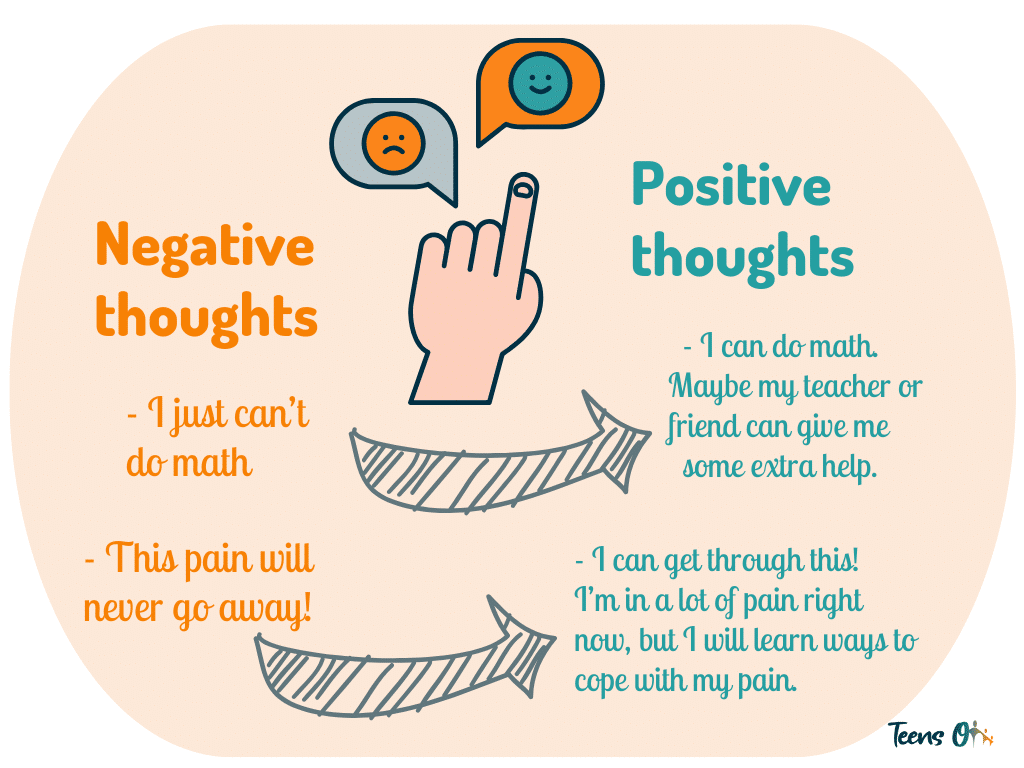
- Thought STOPing

Behaviour Rehearsal: Getting Ready for Stressful Events
- What it is and how it can help
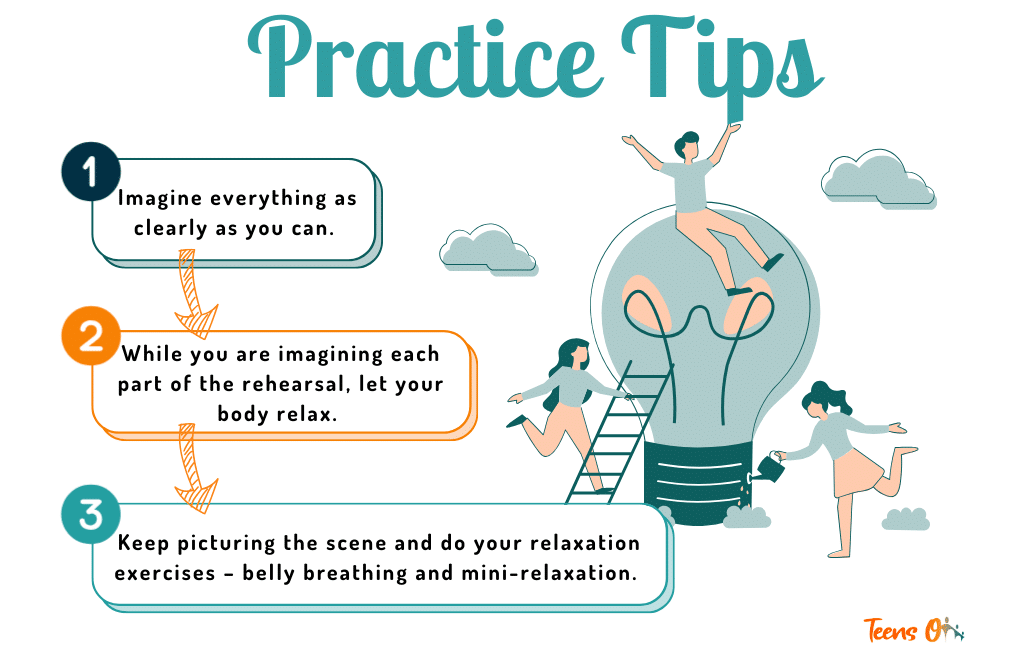
Behaviour rehearsal helps you prepare for an event that you think will be stressful, before it even happens. Since most people know ahead of time what situations will cause them stress, preparing ahead of time helps to reduce that stress. Behaviour rehearsal involves imagining the event before it happens and then using relaxation methods you have learned to help you relax while imagining the event.
- Learning how to do a behaviour rehearsal
To learn how to use behaviour rehearsal, let’s work through an example. Imagine that you are going to be trying out for a part in the school play. You would like to play the lead part, and you are worried that you will forget a line. Just thinking about it makes you nervous.
What you need to do is break the situation into parts that you can imagine. Here, we can break it down into four steps.
EXAMPLE 1: TRYING OUT FOR A PART IN THE SCHOOL PLAY
Watch the video below!
Text from the video:
1. Practicing your lines
You know that even when you practice your lines you feel nervous. So, to prepare, set aside some time each day to rehearse the event. Imagine looking into a mirror and saying your lines. Picture yourself succeeding on each line. Don’t forget to relax as you imagine each part.
2. Taking the bus the day of the play
You expect to be nervous as the bus approaches the school. Imagine the feel of the wind on your face from the open window of the school bus. Think of how you will feel as you see the bus pull up to the school.
3. Walking to center stage
Imagine how you will feel as you walk to center stage. Imagine your heart pounding hard and fast. Imagine how it feels to have your thoughts racing.
4. Saying your lines
Practice hearing your voice as you say your lines. Now, relax your body as you imagine saying your lines. Keep practicing until you can say your lines and be relaxed at the same time.
EXAMPLE 2: GETTING READY FOR AN ANXIETY-PROVOKING MEDICAL APPOINTMENT
1. Schedule it at a good time of the day or week:
Choose a time of day or week that works best for you. If you feel more relaxed in the morning, schedule the appointment for the early hours. If you know that certain days of the week are busier or more stressful for you, avoid scheduling appointments on those days.
2. Get your questions ready:
Before your medical appointment, make a list of questions you want to ask your healthcare provider. This can help you stay focused and ensure that you get the information you need. It can also help alleviate anxiety by giving you a sense of control and understanding of what to expect. Consider writing down any concerns or symptoms you have been experiencing and bring them with you to the appointment.
3. Be honest about your anxiety:
Don’t be afraid to speak up and let your healthcare provider know that you experience anxiety around medical appointments. Your healthcare provider can help make the experience more comfortable for you by providing extra support or talking you through the procedure. They may also have suggestions for anxiety coping techniques you can use during the appointment.
4. Take a friend or family member with you:
Having someone you trust with you during the appointment can be comforting and help alleviate anxiety. They can provide emotional support, help with transportation or logistics, and may be able to ask questions you didn’t think of, and take notes.
5. Peer-to-Peer Support: Try to connect with someone who has been through something similar:
Talking to someone who has been through a similar experience can help you feel less alone and provide insights into how to cope with anxiety. Consider joining a support group or connecting with someone who has gone through a similar medical procedure.
6. Talk to someone:
If you are feeling anxious, talk to someone you trust about your concerns. This can help you process your feelings and come up with coping strategies. Consider talking to a therapist, counselor, social worker, or mental health professional for additional support.
7. If possible, have your vitals taken last:.
By addressing your health concerns first and then having your vitals taken later, you are more likely to feel relaxed and at ease during the appointment.
II. Feeling Good About Yourself
Self-esteem and body image
As a teen, you go through a lot of changes in your body which on its own can be tough to deal with. You may also have to deal with physical changes due to your OI, which can make things hard to manage. Your self-esteem and body image can affect your ability to cope with these body changes.
Self-esteem is all about how much you value yourself or how worthwhile you feel. Self-esteem is important because feeling good about yourself can affect how you act. If you have high self-esteem, you may feel happier. You may find it easier to deal with mistakes. You will be more likely to stick with something until you succeed.
Influences on your self-esteem
Puberty
During puberty, there are physical changes that, when combined with the desire to feel accepted, can cause you to compare yourself to others. You might have gone through this experience. Have you compared yourself to other people around you or celebrities on TV, in movies, or on social media? If you catch yourself doing this, remember that it does not make sense to compare yourself to others because the changes that happen with puberty are different for everyone. Some people develop early, and some later.
Outside influences
Success
Changes in your relationships
As you and your friends mature, you may find that your relationships are changing as well. New relationships develop and sometimes old friendships end. This can be challenging, but is a normal part of growing up. Changing friends and relationships can affect your self-esteem. Remind yourself that this is normal as people get older. If you feel sad about it, talk to someone you trust.
Having a chronic illness
Sometimes having a chronic orthopedic condition like OI can affect how you feel about yourself. Have you ever felt “Why me, why do I have to have OI?” This may be especially true if you look different from your friends. You might also feel this way if there are things you cannot do because of your OI, such as participating in sports or other recreational activities.
Tips for maintaining a healthy body image and self-esteem:
| Stop putting yourself down. | When you catch yourself doing this, try to find a more positive way to approach the thought, or that isn’t a put-down. You can even try using some of the distraction techniques, like thought stopping. |
| View mistakes as learning opportunities. | No one is perfect. Accept that you will make mistakes because everyone does. Mistakes are a part of learning! |
| Try new things. | Experiment with different activities that will help you explore different talents you may have. Then you can take pride in the new skills that you develop. |
| Recognize what you can change and what you cannot. | If you are unhappy with something about yourself that you can change, then work towards changing it. For example, if you want to get fit, make a plan to exercise every day and eat nutritious foods. |
| Set goals. | Think about what you would like to accomplish in the short- and long-term. Then make a plan for how to do it. Stick with your plan and keep track of your progress. |
| Exercise. | It can make you healthier and happier! |
| Have fun. | Spend time with friends and family you care about and do the things you love. Have a good time! |
| Make a contribution. | Participate in a community charity event, volunteer your time in a hospital, or even help tutor a classmate who is having trouble. Feeling that you are making a difference and that your help is valued can do a lot to improve your self-esteem. |
| Stop comparing yourself to others. | Everyone is different, with different situations and their own set of challenges. Don’t get tricked by other people’s outward appearances, or their social media profiles. |
Sometimes low self-esteem and body image can be too much to handle. If you are feeling this way, it can help to talk to a parent, guidance counsellor, social worker, or even your doctor. They can help you put your image into perspective and give you positive feedback.
If you are in Canada, you can also contact the Kids Help Phone (1-800-668-6868) or Tel-Jeunes (1-800-263-2266) and speak to a counsellor.
Depression
Low self-esteem or body image can lead to depression or feeling down.
Some signs and symptoms of depression include:
- Loss of interest in normal daily activities like hanging out with friends
- Feeling sad or down
- Feeling hopeless
- Crying spells for no apparent reason
- Problems sleeping
- Trouble focusing or concentrating
- Difficulty making decisions
- Unintentional weight gain or loss
- Irritability
- Restlessness
- Being easily annoyed
- Feeling fatigued or weak
- Feeling worthless
- Thoughts of suicide or suicidal behaviour (i.e. self-harm)
- Unexplained physical problems, such as back pain or headaches
III. Psychotherapy
OI and your emotions
Have you ever felt any of the following emotions because you have OI?

- Isolated, lonely, withdrawn, or excluded
- Angry, frustrated, or annoyed
- Discouraged
- Helpless or hopeless
- Sad or depressed
- Overwhelmed
- Pain and suffering
- Low self-esteem
- Worry or anxiety
We all feel down from time to time. It is part of the human experience. Your feelings and emotions are valid, no matter what they are. You need to recognize them. If they become too overwhelming or persistent, it is important that you get the help you need because they can affect you physically and emotionally.
Counselling and psychological therapy
- Feeling depressed or having thoughts of harming yourself
- Feeling anxious and worried a lot
- Having a hard time dealing with your family or friends
- Being dependent on alcohol, tobacco, or other substances
- Needing to stop drinking alcohol to be on a certain medication
- Worrying about your future
- Having a hard time making the transition from being treated at a children’s hospital to being a young adult cared for in an adult hospital.
Who can help
- Coping with workload
- Helping teachers understand your OI-related school needs
- Issues with friends
- Problems with bullying
Types of psychotherapies
Psychotherapy is a broad term that includes group, family, and individual meetings with one of the professionals described above. It usually involves talking about your issues and how you deal with life events. Psychotherapy may also include expressing your feelings through art, dancing, or singing.
- Tips about seeking psychotherapy
- You may feel embarrassed to ask for help. Remember that doctors and nurses recommend psychological treatments all the time. They won’t think that you are weird for bringing it up. It is a strength to recognize when you need help and to seek it.
- Give a therapist a chance to gain your trust. However, if you really don’t feel a connection after you have seen your therapist a few times, ask if there is someone else you can see.
- Psychotherapy, unlike other treatments, takes time to see results. Once you find a therapist you like and trust, it will take some time for them to get to know you and address the things that are bothering you. Give it some time.