Search

Staying Active

Staying Active

Staying active is good for your overall health, whether you have OI or not. Engaging in physical activity is highly recommended for individuals with OI due to its benefits in strengthening muscles and bones. Most importantly, they allow you to have fun! Sports and leisure activities can also help improve your general well-being or mood.

Tips on staying active

  • You should do at least 30 minutes of physical activity for a minimum of five days per week.
  • Find an activity that you like to do and get your friends to join you. You are more likely to stick to it if you enjoy it.
  • Be realistic in the activities that you choose.
  • Start slow and build up your endurance.
  • Ask for advice from your physiotherapist or doctor.
  • Exercise shouldn’t cause unusual pain in your joints, or other body parts.
  • STOP right away if you experience chest pain, dizziness, severe shortness of breath or nausea.
  • For more tips, check out 🔗 Canada’s Physical Activity Guide for Youth.
  • Most importantly – HAVE FUN!

Here are some SMART goals examples for staying active:

What are your goals for staying active? Are they SMART goals? Remember here how to create S.M.A.R.T. goals! [link: 🔗 Welcome page]

You may be feeling overwhelmed by all of the exercises that you have been given, so here are some tips to help you get started:

  • Talk to your physiotherapist about how to make this more realistic. You may want to rotate your exercises so you are not doing all the exercises every day. Or you might focus on one or two of the most important exercises for a period of time and then focus on others later.
  • Try to create a SMART goals [add link to SMART Goal – Getting started] and work toward them.
  • Look at what your goals are and what exercises can help you to meet these goals.
  • Recruit a friend or family member to join you. Exercising with someone can make it more fun and help keep you motivated.
  • For additional advice or support, speak to other healthcare providers.
  • Check out the Health Canada website: http://www.hc-sc.gc.ca/hl-vs/physactiv/index_e.html
  • Start slow, build up gradually, and have fun!
Watch the webinar on physical activity In OI with Corinne Mercier and Jessica Buffam, promoted by the Canadian Consortium for Children’s Bone Health (CCCBH):

Search for the OI community on social media. Like this video on “How to Start Exercising With Osteogenesis Imperfecta”!

Finding Your Own Way to Move

Another way of staying active could be walking. Yes, walking with or without an aid, a few steps or a short distance, and without feeling the pressure to do so. Even standing up for a moment, holding onto a table or a couch. You can shift your weight or take a couple of steps with crutches, a walker, or canes. This can help keep your muscles engaged and your body moving in ways that support daily life. Every bit of movement helps with circulation, flexibility, and staying comfortable in your body. If all these feel tiring or tough some days, that’s okay. Remember your spoons? [Link to spoon theory-game] There’s no rule saying you have to do it a certain way or for a certain distance. It’s not about pushing yourself beyond your limits. What matters is finding what works for you. The goal isn’t to do more than you can handle, but to find ways to move that support your independence and well-being. Also, you should be mindful of precautions to ensure safety. Here are a few things to keep in mind:
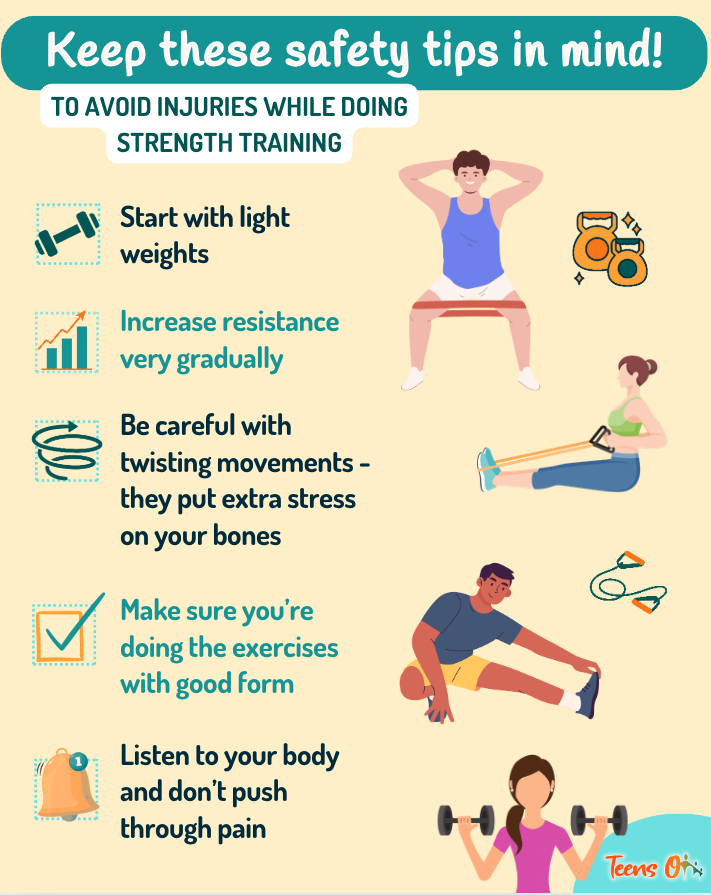
  • Choose sports or activities that are in the water, such as swimming. This allows more independent movement and reduces the risk for fractures or injuries.
  • As much as possible, choose non-contact sports and activities, for example badminton, archery, tennis, or yoga. Check the section OI Athletes to know more about! [LINK]
  • Do some activities that increase your heart rate while being safe, like cycling on a stationary or adapted bike, wheelchair racing, quick walking, and hiking.
  • Use lightweight or adapted equipment, like a foam ball.
  • Play sports in smaller groups to decrease the risk of injuries.
  • If you cannot participate in a sport, consider practicing skills associated with the sport or stay involved by refereeing or scoring.
  • When possible and if accessible, spend some time out of your wheelchair and stand up with your walker to stretch your hip muscles.
  • If you’re feeling tired or experiencing pain or aches, listen to your body.
For some more tips, check out the Individualized School Plan for Optimal Inclusion of Students with Osteogenesis Imperfecta [ADD LINK]. Your ability to safely participate in contact sports may change depending on your condition and fractures. This can be very frustrating and disappointing. You may want to consider a more recreational level of the sport. If you are still very keen on competition, perhaps switching to another sport will allow this. For example, swimming and wheelchair sports can be very competitive, but safer for your bones than other sports. In any case, if you sustain an injury, always give yourself the time to heal before going back to sports. This will reduce pain and the risk of new injuries, and you will enjoy the experience more.

Other Ways You Can Get Involved

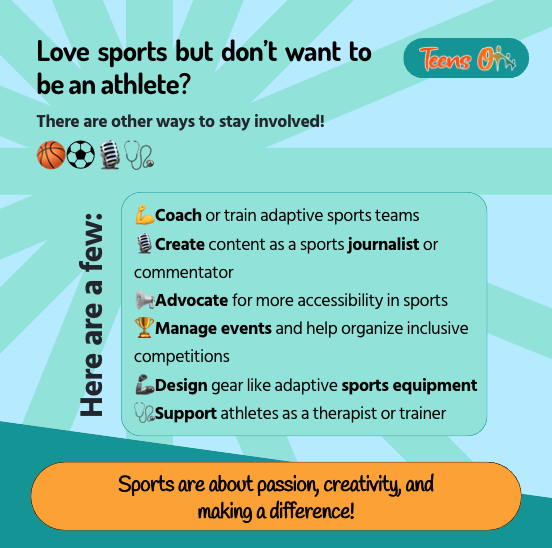
OI never stopped Jaime from pursuing his passion for athletics. Growing up, he found joy in being around sports and discovered swimming. He learned to swim and even competed alongside able-bodied athletes. This experience fueled his desire to coach and mentor others, showing that being part of the sports world isn’t just about playing—it’s about contributing in meaningful ways. Today, Jaime is a highly qualified coach and sports psychologist, holding degrees in computer engineering and sports science. As a sports organizer at the University of Guyana, he trains both able-bodied and disabled athletes, ensuring that sports are inclusive. His journey serves as a reminder that there are various ways to engage with sports, even without competing. Read the entire story here: https://www.stabroeknews.com/2024/08/04/sunday/coach-and-sport-psychologist-jaime-skeete-follows-his-passion-despite-disability

Check out these two interesting websites:

Trouve ton sport is a simple and effective platform to help as many people as possible live an active life. Aimed to help health professionals guide people in their choice of an adapted sport.
www.trouvetonsport.ca

The Défi sportif AlterGo is Canada’s largest multi-sport event, uniting athletes of all levels and abilities since 1984. AlterGo Événements is dedicated to promoting physical activity and adapted sport across Quebec throughout the year. It encourages an active lifestyle and raises awareness for social inclusion among young disabled individuals.
https://defisportif.com

Link copied to clipboard! Go ahead and share it!

Link copied to clipboard! Go ahead and share it!