
Search

This page describes some of the feelings parents may experience when their child has OI. These feelings can include guilt, stress, and worry, as well as pride in the teen’s resilience. It also gives tips on how parents can manage their feelings and cope with stress and worry.

In this module, you will read and see more about:

The Parent Experience

I. How you might feel about your child’s OI

When your child was first diagnosed with OI, you may have experienced many different emotions. You might have felt shock, disbelief, or even guilt. The joy of welcoming your child into the world may have been overshadowed by the weight of the diagnosis, leaving you with conflicting feelings. You may have found yourself wondering if you did or didn’t do something to cause your child’s condition. These thoughts are common among parents, but it’s important to remember that OI is a genetically inherited condition, and you are not to blame.

Over time, your emotions may shift. Early on, you may have felt shock or guilt, but as your child grows, new concerns may arise. You may wonder how to foster your teen’s independence while balancing your natural instinct to protect them. Supporting them as they learn to navigate life with OI—gaining confidence while ensuring their safety—can be challenging. You may also find yourself worrying about their future. You might have concerns about their ability to pursue higher education, find meaningful work, or even start a family. These worries are understandable, but with the right support, resources, and guidance, your child can lead a fulfilling and successful life. 

Listen to some of the stories from other parents with teens with OI. 

II. Strategies to manage your feelings

Coping with stress and worry

Sometimes parenting a teen with an orthopedic condition such as OI can create a great deal of stress and worry that can lead to different types of problems. For example, stress can affect:

  • Your emotions – You may feel anxious, overwhelmed, or even depressed.
  • Your physical well-being – Stress can drain your energy, disrupt sleep, and cause tension.
  • Your relationship with your teen – High stress levels may make communication and connection more difficult.
  • Your ability to support your teen’s health and independence – Stress can impact how you help your child manage their condition and encourage their independence.
  • Your relationships with others – OI can also affect relationships with your partner, extended family, and friends. Some parents find their relationships grow stronger, while others feel strain.
Slide 1 Heading
Lorem ipsum dolor sit amet consectetur adipiscing elit dolor
Click Here
Slide 2 Heading
Lorem ipsum dolor sit amet consectetur adipiscing elit dolor
Click Here
Slide 3 Heading
Lorem ipsum dolor sit amet consectetur adipiscing elit dolor
Click Here
Slide Heading
Lorem ipsum dolor sit amet, consectetur adipiscing elit. Ut elit tellus, luctus nec ullamcorper mattis, pulvinar dapibus leo.
Click Here
Slide Heading
Lorem ipsum dolor sit amet, consectetur adipiscing elit. Ut elit tellus, luctus nec ullamcorper mattis, pulvinar dapibus leo.
Click Here
Slide Heading
Lorem ipsum dolor sit amet, consectetur adipiscing elit. Ut elit tellus, luctus nec ullamcorper mattis, pulvinar dapibus leo.
Click Here
Slide Heading
Lorem ipsum dolor sit amet, consectetur adipiscing elit. Ut elit tellus, luctus nec ullamcorper mattis, pulvinar dapibus leo.
Click Here
Slide Heading
Lorem ipsum dolor sit amet, consectetur adipiscing elit. Ut elit tellus, luctus nec ullamcorper mattis, pulvinar dapibus leo.
Click Here
Slide Heading
Lorem ipsum dolor sit amet, consectetur adipiscing elit. Ut elit tellus, luctus nec ullamcorper mattis, pulvinar dapibus leo.
Click Here

III. Learning More About your Teen’s OI in adolescence

Learning more about your teen’s OI in adolescence is also a good way to reduce the stress and worries you might have regarding their illness. To learn more about your teen’s OI in adolescence, here is a list of the different topics covered in the teen version of this program.

(To list add shortcuts to all Teens OI Modules)

Feel free to visit each of these sections. They can help you learn more about OI in young people. They can also inform you about the kinds of strategies your teen can use to help manage his OI. In Session 12, you will learn more about how to help your teen manage his OI on his own.

IV. The Impact of OI on Siblings

This section explores how children may feel when they have a brother or sister with OI. It also provides practical tips to help parents support their children in managing their emotions and fostering positive sibling relationships.

How siblings feel about OI

Living with OI affects the entire family, including siblings who may not have the condition. As a parent, it’s natural to be deeply involved in your child’s care, but this can sometimes leave their siblings feeling overlooked or even jealous of the extra attention their brother or sister receives. They may struggle to understand why so much time and energy is dedicated to their sibling’s needs. Siblings of a child with OI may experience a range of emotions, including:
  • Confusion about the condition
  • Guilt that they are healthy
  • Stress about the condition, especially if they are older and feel a sense of responsibility
  • Pride in how their sibling manages life with OI
It’s important to know that it’s okay to feel both love and frustration at the same time. Many siblings experience a mix of emotions, and that doesn’t mean they love their brother or sister any less.

How to help siblings manage their feelings

  • It’s important to reassure your other children that their feelings are completely normal. Here are some ways to help them cope and feel included:
    • Encourage siblings to get involved.
    • If appropriate, include siblings in the exercise program with your teen with OI. This could help them feel connected rather than excluded.
  • While it’s natural for them to want to help, older siblings, in particular, may take on caregiving roles that go beyond what’s age-appropriate. Check in with them to make sure they do not feel overworked or resentful. Acknowledge their help and make space for their own needs.
  • Provide roughly the same rules and expectations for both your teen with OI and his siblings. For example, find ways of adapting chores for your teen with OI so he can participate as a productive member of your home. Keep discipline as similar as possible between all your children. This way, siblings will not feel that your teen with OI is getting special treatment.
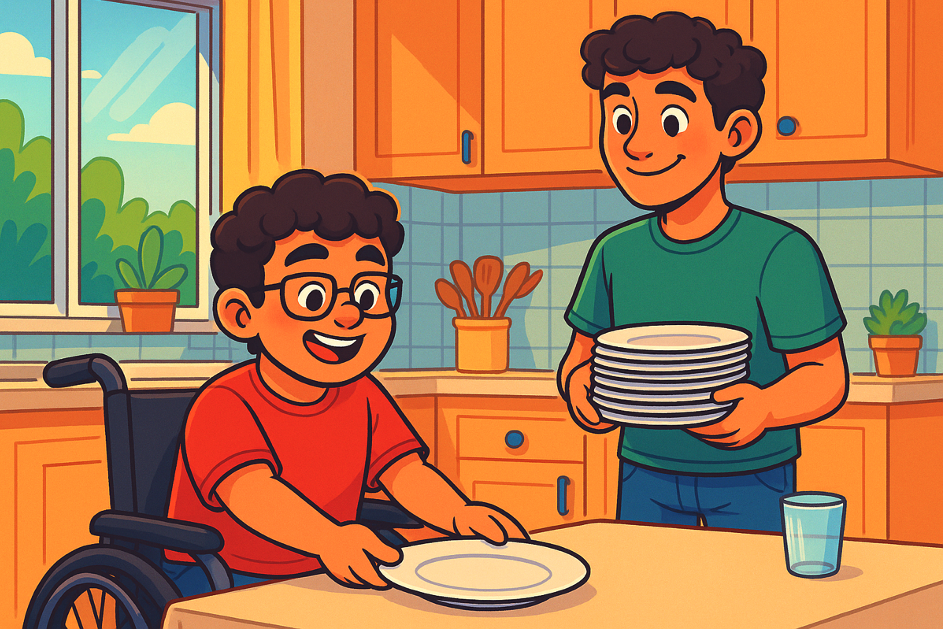
    • EXAMPLE: Chris is a teen with OI, and Pat is his sibling. It is Chris’s turn to set the table, but carrying the heavy stack of dishes to the table is too difficult. Pat can carry the dishes to the table and Chris can finish setting it. This way, Chris is still participating, and Pat doesn’t feel like he’s doing all the work.
  • Allow siblings to openly discuss their feelings. Have them talk about their efforts and challenges in having a brother or sister with OI. Encourage siblings to express their feelings in a way that works for them—whether that’s talking, writing, drawing, or another creative outlet. Let them know their emotions are valid and that it’s okay to express frustration, sadness, or pride.
  • Help siblings understand the condition, treatments, and challenges their brother or sister faces. If possible, consider bringing them to an OI clinic appointment so they can learn firsthand.
  •  Connect siblings with peer support. Talking to other children who have a sibling with OI can help them feel less alone and validate their experiences.
  • Make sure to spend some alone time with each of your children. This should be at a regular time that they can count on. Even short moments of focused attention can reassure them that they are just as important.
  • Recognize that emotions may change over time. Younger children may struggle with sharing attention, while older ones may feel a sense of responsibility or worry about the future. Keeping communication open at every stage is key.
V. The Impact of OI on your Family

The impact of OI on family activities

OI not only affects your teen. It also impacts your entire family. The effects on your family can vary depending on the type and severity of OI your teen has, their treatments, and the frequency of fractures or surgical interventions.

You might find yourself spending extra time helping your teen with OI, especially during a fracture and/or surgery episode. This shortens the amount of time you spend with other family members.

Change of plans

Your plans for family activities may need to be changed or cancelled with little notice because your teen has had a fracture and/or requires surgery. You might want to have a “Plan A,” “Plan B,” and sometimes even a “Plan C” for your family activities. This builds flexibility into your plans and ensures that fun family activities can still take place. For example:
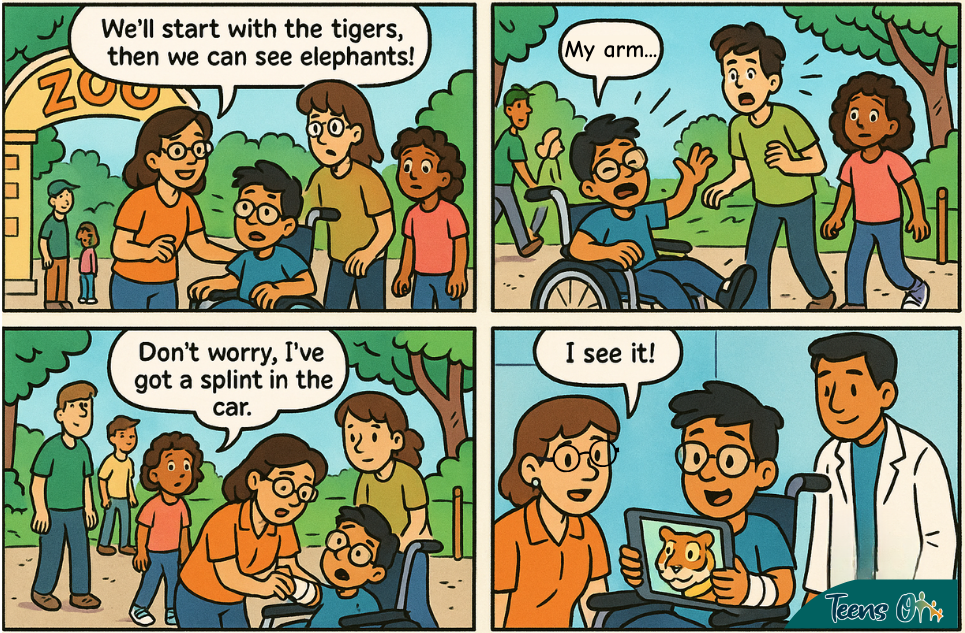
  • You and your family decide to plan for a family outing to a zoo. The morning of the outing, Chris, your child with OI, in the excitement of being at the zoo, trips and injures his arm.
  • Fortunately, you keep basic medical supplies in your car (Plan B) and you are able to splint the arm.
  • Then, one parent takes Chris to the ER and the rest of the family can stay at the zoo.
  • Chris may be able to catch up to the others if the wait is not too long; if not, he has an iPad (Plan C) that he can use to video call the family so they can show him the tiger he’s been so excited to see


Strategies to manage the impact of OI on your family

There are several strategies that can help you and your family cope with the negative aspects of OI. By the time your child reaches their teen years, you are already well-versed in managing the daily realities of OI. However, adolescence brings new challenges—both physical and emotional—that require ongoing learning and adaptation.

Changes and Challenges in Adolescence:

  • Evolving Orthopedic Needs – Growth spurts may lead to increased skeletal issues, such as worsening scoliosis or changes in bone density. Orthopedic surgeries may become necessary.
  • Dental Complications – Occlusion changes, the need for braces, and potential dental surgeries may arise.
  • Mental and Emotional Well-being – Teens may struggle with self-esteem due to short stature, physical differences, or social limitations. Increased independence and identity formation can be impacted by living with a visible and physically limiting condition.
  • Social Participation & Isolation – Physical restrictions might limit involvement in certain activities, leading to frustration or feelings of exclusion from peer and family events.
  • Transition to Self-Management – Teens are beginning to take a more active role in their own healthcare, learning to communicate with medical teams, manage medications, and advocate for their needs.

Supporting Your Teen with OI During Adolescence:

  • Emotional Challenges – Adolescents with OI may face body image concerns, frustration with limitations, and feelings of isolation. Encouraging open communication, providing access to mental health support, and fostering self-advocacy skills can help.
  • Medical Communication – Regularly checking in with the healthcare team ensures that any concerns are addressed. If you find online health information, sharing it with their doctors can help verify its accuracy and relevance.
  • Building Social Connections – Teens with OI may experience isolation due to physical limitations. Encouraging them to join support groups, online communities, or disability-friendly activities can help foster friendships and reduce loneliness.
    Staying Organized – Keeping track of medical appointments, treatment plans, and important documents in a binder, app, or digital format can help streamline care and reduce stress.
    Fostering a Positive Mindset – Encouraging teens to focus on their strengths, celebrate small victories, and view OI as just one part of their identity can support confidence and emotional well-being.

Take care of yourself

Most parents put their teen’s needs and the needs of others well before their own. This is natural in times of crisis. However, you are important too.
  • Take care of your own physical, mental, and spiritual needs. Not taking care of yourself can lead to physical and mental health problems. This can have a negative effect on your teen in the long run.
  • Teach your teen the value of self care by modelling it yourself.
  • If you find it impossible to meet both your needs and your family’s needs, find help. Look for community and governmental resources like respite care.
  • Talk to a close friend and accept offers of support. If needed, ask your doctor for a referral to a counsellor.
  • Remember: take care of yourself!

Consider your parenting style

Many parents make some changes in the way that they parent their teen with OI. Some of these changes may lead to increased communication and support for the teen. However other changes in parenting may, unintentionally, not support your teen’s full potential. For example, parents may lower their expectations of what their teen can do and then have trouble encouraging better self-management in their teen. Parents can also feel guilty about the new demands that their teen with OI has in his life.

Take it one day at a time

  • During a fracture or times of stress, it is easy to feel overwhelmed. Take things one day at a time.
  • Focus on a manageable number of tasks and get support from others.
  • Having routines can help streamline your tasks.
  • Consider how you and others in your family cope with stress.
  • Encourage healthy coping strategies for stress within the family, and lead by example.

Remember you are not alone

  • Remember that you are not alone. Others have dealt with the same issues you are facing. They may be able to give you support and advice that can help.
  • Sometimes it is helpful to talk with another parent of a teen with OI who “gets it” through online discussion boards or support groups.

Accessing other resources

There may be other social support resources available in your area. Speak with your doctor or other members of your health care team for recommendations.

VI. The Financial Impact of OI

When your teen has OI, the financial impact on your family can be quite significant. The expected and visible expenses include:
  • Paying for medications, treatments and equipment
  • Expenses related to making homes more safe and accessible
  • Expenses related to medical appointments such as transportation, parking, lodging, and meals
  • Paying for childcare
  • Lost wages from work because of medical appointments, a fracture, or unexpected surgery
  • Delays or denials in insurance reimbursements due to lengthy application processes
There are other “hidden” costs that may not initially seem financial in nature. They can have a financial impact over the long-term. For example, if you use up all of your vacation time from work to care for your teen, you won’t be able to take time off for yourself or for your family. This can lead to depression, stress-related illness, and other physical and mental health issues. These illnesses could have a financial impact on you and your family later on, causing you to need more time off work for treatment. Also, if you take a lot of time off work, you could be passed over when it comes time for a promotion. Or, you may be unable to accept a higher-paid position because of less flexibility with work hours.

VII. Coping with work and your teen’s OI

Some employers are more flexible than others when it comes to allowing time off. Here are some tips for coping with work:

  • Communicate with your employer and see if there is a way to negotiate time off work without loss of pay. Your job might allow make-up time on weekends or working an hour later each day to take time off, with pay, for an appointment.
  • Your employer might allow you to take sick time to care for your teen.
  • Your workplace might let you do some of your work remotely via computer.
  • If available, ask to see your human resources representative to let them know what’s going on. They will know what can be done in your workplace to best accommodate your needs.
  • If you are having problems with your employer related to your teen’s OI, ask to speak with the social worker or counsellor attached to your teen’s health care team.
  • You can call the Ministry of Labour. They can clarify your rights as an employee and will inform you of your employer’s legal obligations.

Accessing other resources

  • There may be other financial resources available in your area. Speak with your doctor or other members of your health care team.

A helpful website you may want to check out is by: The Canada Revenue Agency – What you can deduct

These websites provide information about eligibility for claiming medical expenses. You may also want to keep receipts from hospital stays and hospital appointments to see which receipts you are eligible to claim. For example, if you are a certain distance from the hospital, you may be able to claim parking expenses and certain travel expenses.

Link copied to clipboard! Go ahead and share it!

Link copied to clipboard! Go ahead and share it!