Search
In this module, you will read and see more about:

Healthy Living

I. Staying Active

Staying active is good for your overall health, whether you have OI or not. Engaging in physical activity is highly recommended for individuals with OI due to its benefits in strengthening muscles and bones. Most importantly, they allow you to have fun! Sports and leisure activities can also help improve your general well-being or mood. However, you should be mindful of precautions to ensure safety. Here are some things to think about:

  • Choose sports or activities that are in the water, such as swimming. This allows more independent movement and reduces the risk for fractures or injuries.
  • As much as possible, choose non-contact sports and activities, for example badminton, archery, tennis, or yoga.
  • Do some activities that increase your heart rate while being safe, like cycling on a stationary or adapted bike, wheelchair racing, quick walking, and hiking.
  • Use lightweight or adapted equipment, like a foam ball.
  • Play sports in smaller groups to decrease the risk of injuries.
  • If you cannot participate in a sport, consider practicing skills associated with the sport or stay involved by refereeing or scoring.
  • When possible and if accessible, spend some time out of your wheelchair and stand up with your walker to stretch your hip muscles.
  • If you’re feeling tired or experiencing pain or aches, listen to your body.

For some more tips, check out the Individualized School 🔗 Plan for Optimal Inclusion of Students with Osteogenesis Imperfecta. Your ability to safely participate in contact sports may change depending on your condition and fractures. This can be very frustrating and disappointing. You may want to consider a more recreational level of the sport. If you are still very keen on competition, perhaps switching to another sport will allow this. For example, swimming and wheelchair sports can be very competitive, but safer for your bones than other sports. In any case, if you sustain an injury, always give yourself the time to heal before going back to sports. This will reduce pain and the risk of new injuries, and you will enjoy the experience more.

Talk to your health care team about what activities are important to do. They can tell you how to work towards returning to your previous activities following a fracture or injury, or whether it may be better to adjust your activities.

Tips on staying active

  • You should do at least 30 minutes of physical activity for a minimum of five days per week.
  • Find an activity that you like to do and get your friends to join you. You are more likely to stick to it if you enjoy it.
  • Be realistic in the activities that you choose.
  • Start slow and build up your endurance.
  • Ask for advice from your physiotherapist or doctor.
  • Exercise shouldn’t cause unusual pain in your joints, or other body parts.
  • STOP right away if you experience chest pain, dizziness, severe shortness of breath or nausea.
  • Most importantly – HAVE FUN!

For more tips, check out 🔗 Canada’s Physical Activity Guide for Youth.

Here are some examples for staying active:

Examples of goals to stay active with drawings of young people's faces

What are your goals for staying active? Are they SMART goals? Remember that S.M.A.R.T. goals are:

  • Specific to you
  • Measurable
  • Achievable
  • Realistic
  • Timely – can be achieved in a realistic timeframe.

🎯 A goal is something that is important to you that you want to have happen or want to accomplish.

Image explaining how to achieve a SMART goal. Words: specific, measurable, achievable, realistic and time frame

II. Eating Healthy

Why is it important?

Teenagers normally have a growth spurt between ages 12 to 18 (typically earlier for girls and later for boys). Teenager trying to juggle a healthy diet
  • A healthy diet helps your growth and development. It provides the right amount of nutrients to keep you healthy and helps to prevent health problems.
  • A poor diet may lead to problems such as anaemia (low red blood cells which reduces the amount of oxygen going to body tissues), poor energy, stunted growth, eating disorders, muscle weakness, constipation, reduced immunity, delayed healing, irritability, difficulty concentrating, skin problems and weight problems.Ideally, your diet should be high in vitamins and minerals (nutrient-dense) and low in processed foods, which are high in unhealthy fats (trans fat and some types of saturated fats) and simple sugars. Eating foods that are low in added fat and sugar can help you stay at a healthy weight and decrease the risk of health problems. Canada’s Food Guide can help you make the right decisions for a healthy diet and offer many nutritious and delicious recipes. You can also check out “My Plate” from the US Department of Agriculture to see if you are making healthy choices and to get inspired.
  • A poor diet may cause other health issues later in life such as heart disease, diabetes or even cancer. A nutritious diet and regular physical activity can lower your risk of having some of these problems.
  • A healthy diet should include different kinds of foods from all the food groups. Meals should have enough of the following to help your mind and body grow:
    • Vegetables and fruits
    • Meat and meat alternatives, such as beans, legumes, nuts, and lean meats
    • Grain products, such as brown rice, quinoa, oats and whole grain breads and pastas
    • Milk and milk alternatives, such as yogurt, cheese and unsweetened plant-based beverages (soy/oat/almond milk)
Ideally, your diet should be high in vitamins and minerals (nutrient-dense) and low in processed foods, which are high in unhealthy fats (trans fat and some types of saturated fats) and simple sugars. Eating foods that are low in added fat and sugar can help you stay at a healthy weight and decrease the risk of health problems. Canada’s Food Guide can help you make the right decisions for a healthy diet and offer many nutritious and delicious recipes. You can also check out “My Plate” from the US Department of Agriculture to see if you are making healthy choices and to get inspired.

Commons Challenges

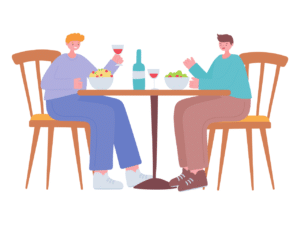
image of two people having dinner at a table and talkingA diet high in sweets (packaged and prepared candies, cookies, cakes, etc.), highly processed foods, fried foods and fast foods can result in poor nutrition. It is important to limit fast food and convenience foods and to eat home-made meals more often, since home-made foods are often more nutrient- and fibre-dense, and lower in saturated fat, simple sugars and sodium (salt). examples of fast foods and convenience foods are hamburgers, hot dogs, French fries, pizza, potato chips, candy, chocolate, commercial baked goods, and sugary drinks. Try to replace these high fat, high sugar foods with healthy foods from the four food groups (vegetables and fruit, meat and meat alternatives, grains and milk and milk alternatives). You can make big improvements to your diet by making small changes, like swapping out soda/pop for milk or water, or choosing vegetables and healthy dips (like hummus or guacamole) as a snack instead of candy, chips, cookies, or chocolate bars. This doesn’t mean you are not allowed to have any junk food or sweets at all – you can have a healthy diet with some indulgences occasionally. Moderation is the key!
plate with cutlery, representing meal timeSkipping meals, especially breakfast, often leads to higher hunger during the day and snacking on high-energy highly processed foods rather than more nutritious foods. It is important to eat three meals to provide your body with constant energy throughout the day. Complete with healthy snacks in between if you feel hungry. Not hungry for three meals? Consider reducing your portions or splitting a meal in 2 snacks (ex.: instead of a complete breakfast, have 1 fruit when you wake up and yogurt with granola 2 hours later).
colored trending iconIt is tempting to try those because they often promise quick fix for weight loss or health problems. However, fad diets may be overly restrictive, unbalanced, lacking in essential nutrients and may not have scientific evidence to suggest they have proven benefits. Some diets may show short-term benefits such as weight loss that have been shown to not last in the long-term. During childhood and adolescence. a well-balanced diet is essential to provide all the nutrients you need to grow and stay healthy, and this requires enough food. Eating should also be an enjoyable experience! Overly restrictive diets can affect your quality of life by limiting your dietary choices, and the times/places you can eat.

Also, extreme dieting is too often a gateway to the slippery slope of disordered eating which could lead to eating disorders such as anorexia nervosa and bulimia nervosa. Anorexia nervosa is defined as an obsessive desire to lose weight by restricting food intake. Bulimia nervosa is typically binge eating followed by compensatory methods like throwing up, using laxative medicine, fasting (not eating at all) or intense exercising. You should consult your physician and/or dietitian for advice before starting elimination or restriction diets to ensure your diet meets all of your nutrient needs. You should also consult your physician if you think you might have symptoms of eating disorders., or visit online resources to get some help (NEDIC in Canada, ANEB in Quebec).

Dietary Supplements

pot of medicine.A dietary supplement contains ingredients to add to the diet. These ingredients may be vitamins, minerals, herbs or other plant materials, amino acids, or enzymes. Supplements may come in pill, capsule, powder, or liquid form. They may be sold in a grocery, health food, or drug store. You can also get them through the internet, TV, or direct sales.

Many supplements claim to treat or even cure various conditions. Be critical of claims that seems “too good to be true”. Unfortunately, there is usually no scientific evidence to support these claims

Always use caution when choosing a dietary supplement. You may want to check with a health care professional, such as a doctor, pharmacist, or dietitian, before taking any supplement. Sometimes, a supplement has to be taken at a certain dose for it to be effective, but it is not always sold at these doses.

However, some dietary supplements have been proven effective. For example, vitamin D is important for building strong bones because it increases the absorption of calcium. When possible, try to prioritize getting nutrients from the food you eat as it contains other important molecules that will increase the absorption or increase the positive effects of those nutrients. However, when this is not possible, supplements are a great plan B!

learning about nutrition worksheet

You can 🔗 download this sheet and stick it on your fridge so you remember all your healthy options 🙂

Other tips for healthy eating

Here are some more tips for healthy eating:

  • Drink plenty of water throughout the day. It will keep you hydrated and can reduce hunger pangs. How much water you need depends on the climate and your body. Dark or strong smelling urine is a sign that you need to drink more fluids.
  • Get cooking in the kitchen! Home-made meals are healthier and can be fun to prepare. Start simple, no need to be fancy or complicated!
  • Try to add color to most of your meals with fruits and vegetables (raw, cooked, fresh, frozen, and canned, no matter!): spinach in your favorite pasta, frozen berries in your cereals, crunchy lettuce to your sandwiches, raw carrots to your lunch box, apple with your snack, etc.
  • Choose whole foods (unrefined or unprocessed foods) more often.
  • When choosing packaged foods, choose foods with fewer ingredients and additives.
  • Get your whole family involved! Healthy eating is easier when everyone does it.
  • When possible, eat meals together, at the kitchen table.

Tips For Healthy Eating

Choose calcium rich foods daily such as cow’s milk or plant-based alternatives, cheese, yogurt, soy-based products, dark greens, dried beans, and nuts. Cow’s milk or plant-based alternatives are also high in vitamin D. Aim to meet your growing body’s requirements (see table below). Your doctor or dietitian will instruct you on how much to take from a supplement if needed.

Calcium & Vitamin D Requirements

Age (years) Calcium Vitamin D
1-3 700mg 600 IU
4-8 1000 mg 600 IU
9-18 1300 mg 600 IU
19-70 1000 mg 600 UI
OI adults with short stature may require less calcium and vitamin D supplements than usually prescribed. Total calcium intake of 800 to 1000 mg (milligrams) per day is usually sufficient. Supplemental vitamin D intake should not exceed 800 IU/day. (🔗 Reference: OIF )
    • What are your goals for eating healthy? Are they SMART goals (Getting Started Module)? Remember that S.M.A.R.T. goals are:
Image explaining how to achieve a SMART goal. Words: specific, measurable, achievable, realistic and time frame

III. Lifestyle Choices

It’s your choice to drink, use drugs or not. In this section, learn about the effects drugs, drinking alcohol, and smoking  or vaping can have on OI and your health.

Drugs

The term “drug” can refer to a medication that is prescribed by a doctor or purchased without a prescription at a pharmacy. The term can also be used for recreational drugs. legally, or prescribed medications that are used recreationally like opioids. There are many different types of recreational drugs, such as:
  • Alcohol
  • Nicotine (vaping/cigarettes)
  • Marijuana (pot, weed, joint, THC)
  • Cocaine (coke, snow, flake, blow)
  • Benzodiazepines
  • Opioids
  • Amphetamines (ecstasy, X, E, uppers, XTC, dexies, speed, meth, ice, crank, cat)
  • Heroin (H, horse, junk, smack)
  • Lysergic acid diethylamide (LSD)
  • Psilocybin (magic mushrooms, shrooms)
  • Anabolic steroids
Recreational drug use can be harmful in many ways:
  • They can interact with your medications and possibly cause damage to organs like your liver.
  • They may cause other physical problems like vomiting, kidney injury, or lung damage.
  • They may cause psychological problems like confusion, anxiety, learning problems, or memory loss.
  • They can lead to risky behaviour like unprotected sex, excessively spending money, driving a car while inebriated, or riding in a car with a drunk driver.
  • They can lead to addiction. Addiction means that you use the drug for a psychological high and your body becomes used to the effects of the drug. It can be very hard to stop using them.
  • Some drugs, especially when bought illegally, can have other drugs or chemicals in them. It is difficult to know what is in them and what effect they can have on you.
  • Many drugs are illegal and can lead to trouble with the law.
  • A drug overdose can cause serious mental or physical damage or even death.
  • They may affect your bone density.
Some young people believe drugs will help them think better, be more popular, become more active, or become better athletes. Others are simply curious and figure trying one won’t hurt. Others want to fit in with their peers. Many young people also use drugs because they are 🔗 depressed or think drugs will help them escape their problems. Actually, drugs don’t solve problems but can in fact cause more issues. Drugs can hide feelings and problems, preventing them from being resolved. When a drug wears off, these feelings and problems remain – or become worse. In some cases, drugs can ruin every aspect of a person’s life – physically, mentally, socially, and financially.

Vaping and Cigarette smoking

There are many different reasons for why people start smoking. What’s important to know is that vaping/cigarette smoking is bad news for your health. The addicting ingredient in the vaping/cigarette tobacco, nicotine, causes the body and mind to become so used to the nicotine that you feel that you need to have it to feel normal. Vaping/cigarette smoking has been found to cause cancer, a lung disease called emphysema, and heart disease.

Vaping/cigarette smoking is also expensive. Once it becomes a habit, smoking can cost you thousands of dollars a year. It won’t take long for smoking to make a big dent in your wallet.

E-cigarettes, often called vape pens, are cheaper and usually come with different flavours that may make it more attractive than cigarettes. Some products also contain no nicotine and are seen as a healthier alternative to smoking cigarettes. However, they also come with their own health risks, which include lung injury, increasing LDL cholesterol in the blood (the “bad cholesterol”), negative effects on the heart, and enhanced changes of blood clot formation. The long-term effects of vape pens are still being investigated since they are still a relatively new product.

Some consequences of smoking can worsen your OI:

  • Smokers lose bone density, which increases their risk of osteoporosis. Osteoporosis can cause the bones to become thin and weak, and more likely to fracture. If you smoke, your chances of developing osteoporosis become greater.
  • Smoking can tighten blood vessels in our body. This can prevent oxygen and nutrients from getting to our skin. It can make you look pale and unhealthy, and can make you prone to wrinkly skin at an early age. Some research studies have also linked smoking to an increased risk of developing psoriasis.
  • Smoking can cause a faster heartbeat, poor blood circulation, and shortness of breath.

Other consequences of smoking include:

  • Developing wrinkles and yellow teeth
  • Bad breath
  • Bad-smelling clothes and hair. It is often hard to get the smell of smoke out as it lingers for awhile.
  • Problems if you take birth control. Girls taking hormone-based birth control, such as The Pill, The Patch, or The Ring increase their risk of blood clots, strokes, and heart attacks if they smoke.
  • Greater risk of injury and slower healing time. Smoking can affect your body’s ability produce collagen, which is the protein that connects your bones, tendons, cartilage, and muscles. This means that damage to tendons and ligaments will heal more slowly in smokers.
  • Increased risk of illness. Smokers tend to have more colds, flu, bronchitis, and pneumonia than nonsmokers. Also, young people who diet by smoking instead of eating lack the nutrients to grow, develop, and fight off illness properly.

The best way to avoid the problems caused by vaping/cigarette smoking is to not start smoking in the first place. It may be difficult to do this if others around you smoke and you are offered vape pens or cigarettes. If you find yourself in this situation, have your reason for not smoking ready, such as “I just don’t like it,” or “I want to stay in shape for swimming,” or “No thanks, not right now.”

If you do smoke and would like to quit, there is a lot of support available. Information is available on the internet, through your local hospital, and organizations like the Canadian Cancer Society. You can also speak to your doctor. These resources can help you with whichever approach to quitting you prefer. Some people decide to give up smoking all at once and others find that a gradual approach is better. Others may even prefer a support group for young people who would like to quit. This website from the Canadian Cancer Society can help you find different types of support to help you quit smoking based on your location.

Quitting smoking can be difficult at first, but don’t give up! Staying smoke-free can help bring back more energy, better looks, and more life to live!

Alcohol

Deciding to drink is a personal decision that a lot of young people are faced with, even before they are the legal age to drink. Before you make that decision, it helps to get as much information as you can. Below is some information you may find helpful.

Alcohol can come in many different forms. Some people drink it for the taste or the effect it can produce such as helping you relax. It can also be used as a cleaner or antiseptic. When people drink alcohol, the alcohol is absorbed into the bloodstream, which then carries the alcohol throughout the body. The alcohol affects the brain and spinal cord, which are important in controlling almost all bodily functions.

Alcohol is a depressant. This means it slows down the functioning of your central nervous system – your brain and spinal cord. Alcohol can slow down the messages trying to get to your brain. In some cases, it can block the messages all together. This causes changes in your perceptions, emotions, movement, vision, and hearing.  

If you have had a lot of alcohol to drink, you will become drunk. You may start to stagger, lose coordination, slur your speech, and be confused and disoriented. Impaired coordination and judgment can increase the risk of accidents or falls. You might become very friendly and talkative or you could become angry and aggressive. Alcohol will also slow down your reaction time. If you drive, it takes longer to respond to a person running out in front of the car you are driving. This is why drinking and driving is illegal.

Drinking large amounts of alcohol in a short time period can lead to alcohol poisoning. This is exactly what it sounds like. The body becomes poisoned by a large amount of alcohol. Vomiting is usually the first symptom. Extreme sleepiness, unconsciousness, difficulty breathing, low blood sugar levels, seizures, and even death may result. If you suspect someone may have alcohol poisoning, get them medical help as soon as possible.

If you drink a lot of alcohol for a long time, your central nervous system makes changes to adapt to the alcohol. If you stop abruptly, your brain is not used to functioning without alcohol anymore and you can have alcohol withdrawal. The symptoms of withdrawal can go from anxiety, shaky hands, nausea, and vomiting, to hallucinations, seizures, and even death. This is very serious, and you should seek medical help if you suspect you or someone you know is in this situation.

It is your choice to drink, use drugs, or NOT!

Even if you don’t really want to smoke, drink, or use recreational drugs, it can be hard to avoid it, especially when your friends are doing it. You might not want to feel left out. There are, however, different strategies you can try. Some people find it helps to just say “no” without giving any explanation. Others like to give a reason. You could say, “I’m not into drinking/smoking”, “I have a game tomorrow”, “My parents are coming to pick me up soon”, “I already got in trouble for drinking once, I can’t do it again”, “I don’t like the taste; it makes me feel sick” or “I can’t smoke this with my medications”.

If you are going to a party where you know alcohol or other drugs will be available, it’s essential to take extra precautions to ensure your safety and well-being. Take the time to discuss your intentions and potential concerns with your friends before the event. Work together to create a safety plan that addresses your specific needs and concerns.  Consider choosing a trusted friend who understands your condition to accompany you to the party as a designated support person. This individual would be able to assist you in navigating the event safely. You and that friend can make up a signal for when it’s time to leave or if you’re feeling unsafe.

If you think you need some help or just someone to talk to, you can speak to your doctor, school counselor, or even a trusted adult relative.

There are a lot of resources available to help those who require help for alcoholism or recreational drug use. You can find a list of these in the Resource section of this website.

Link copied to clipboard! Go ahead and share it!

Link copied to clipboard! Go ahead and share it!